TechDebtGPT
- Role
- Lead Product Designer
- Scope
- Product strategy · Research · UX/UI · Prototyping
- Product
- AI · Developer Tools · B2B SaaS
AI-powered engineering analytics
Turning complex engineering signals into decisions teams can act on.
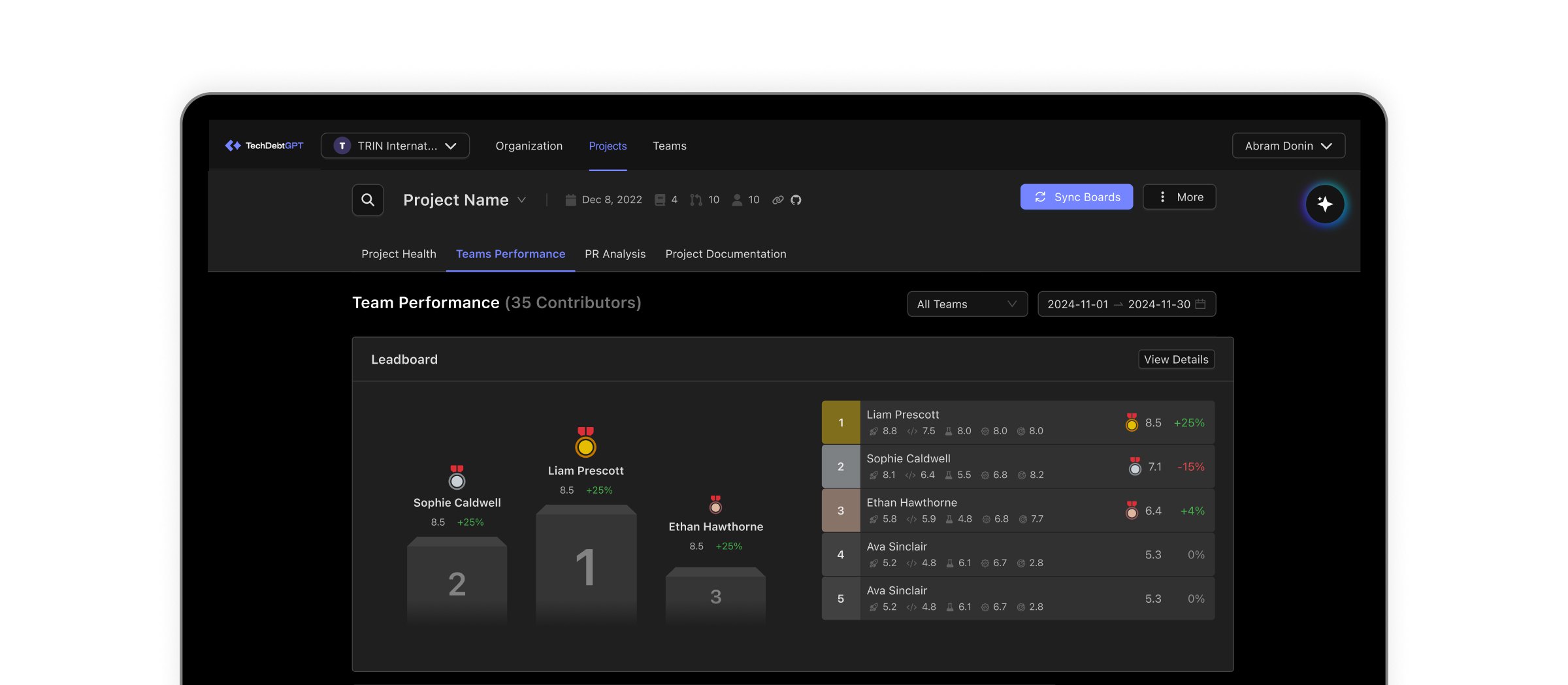
TechDebtGPT helps engineering leaders understand code health, technical debt and team performance without digging through fragmented engineering data.
I led product design from discovery through beta, working closely with engineering to translate complex repository and AI-generated signals into clear, trustworthy product experiences.
+46%Customer satisfaction post-beta
1.5×Faster access to team insights
Post-beta interviews showed that engineering insights were easier to understand and act on.
Validated team-performance analytics as a product direction beyond technical-debt monitoring.
The Problem
Engineering data existed.
Understanding what it meant was the harder problem.
Engineering teams had access to repository activity, pull requests, code-quality signals and delivery metrics — but these signals lived across tools and were difficult to interpret together.
Developers needed enough depth to investigate issues, while engineering leaders needed a fast way to understand team health, project risk and where attention was required.
The product challenge was deciding which signals mattered, how they related to one another, and how to make them understandable without oversimplifying the underlying complexity.
Discovery & Research
What we learned
I spoke with developers and engineering managers about how they evaluate technical debt, project health and individual contribution, and analyzed how existing engineering intelligence tools surface risk and repository health.
01
Data wasn’t the problem.
Teams already had repository activity, pull requests, code-quality signals and delivery metrics.
02
Different roles needed different depth.
Developers needed technical detail; engineering leaders needed fast orientation.
03
Interpretation was fragmented.
Teams lacked a shared way to understand project health, technical debt and individual contribution.
Design decisions
Design decision 01
Structuring complex engineering data
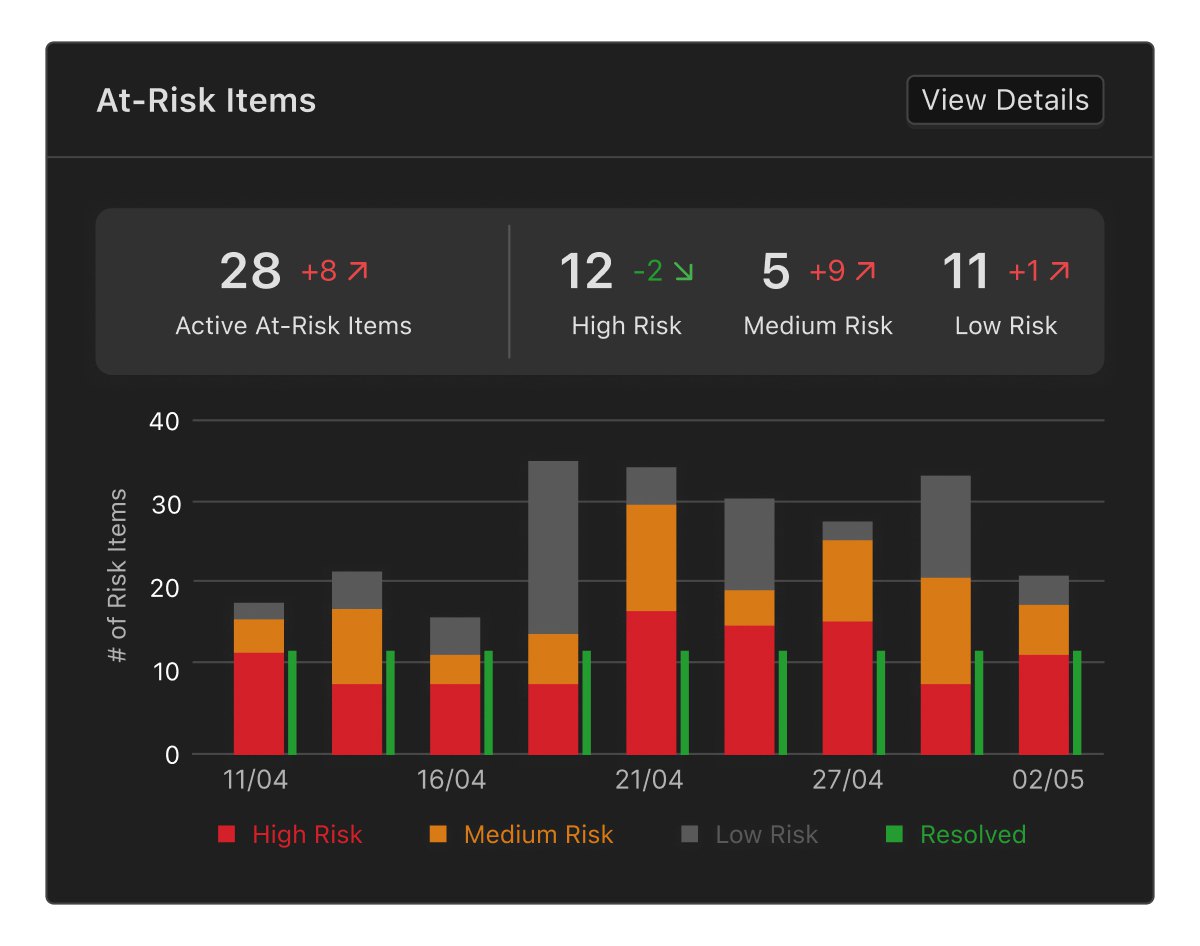
Engineering teams needed both a quick understanding of project health and enough depth to investigate individual signals.
I structured the experience progressively: high-level health and risk indicators first, followed by deeper team, contributor and code-level analysis when needed.
Design decision 02
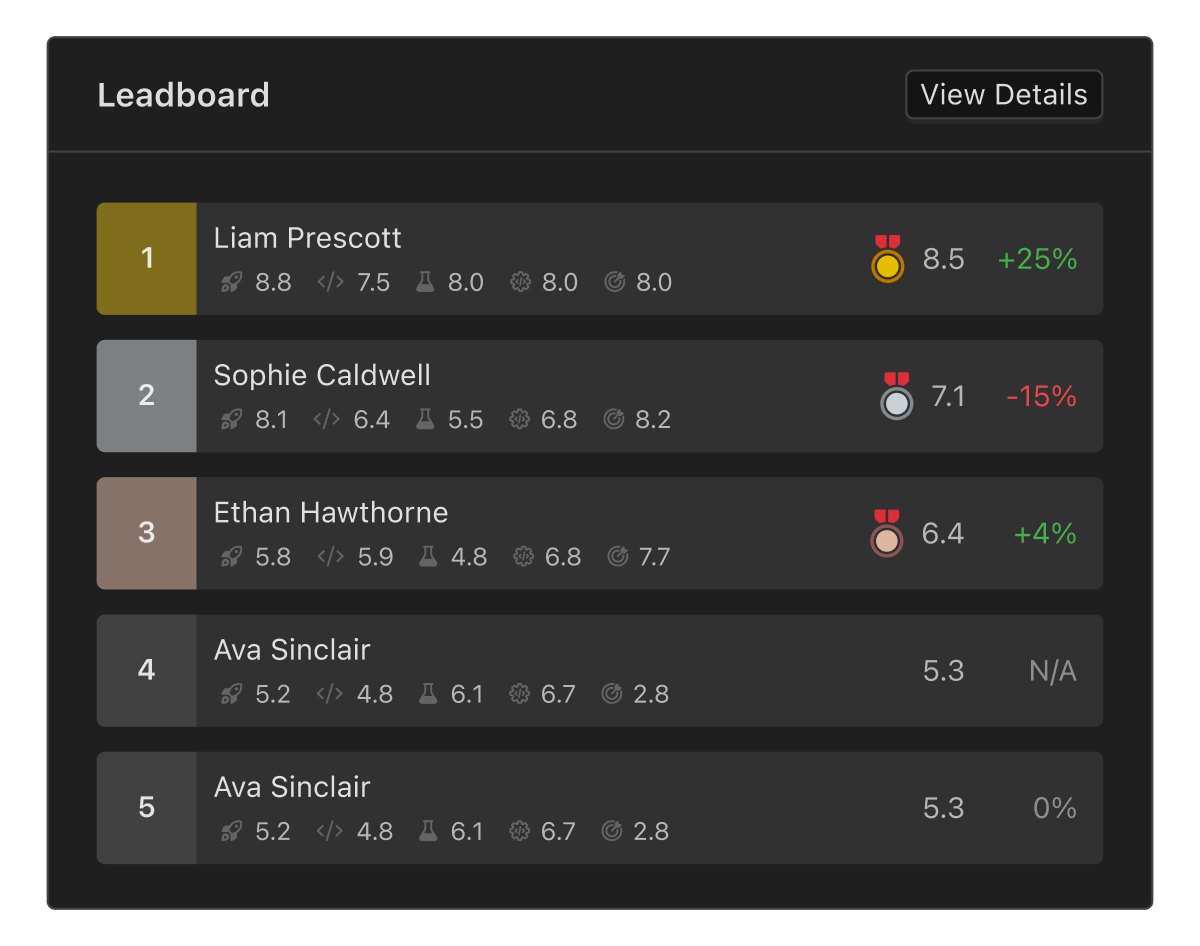
Making team performance easier to interpret
Team performance combined several underlying engineering signals.
Showing every metric equally created too much cognitive load, while reducing performance to a single score removed important context. I designed a layered view that gives teams quick orientation first, while keeping the underlying performance and risk signals available for deeper investigation.
Designing trust into AI-generated insights
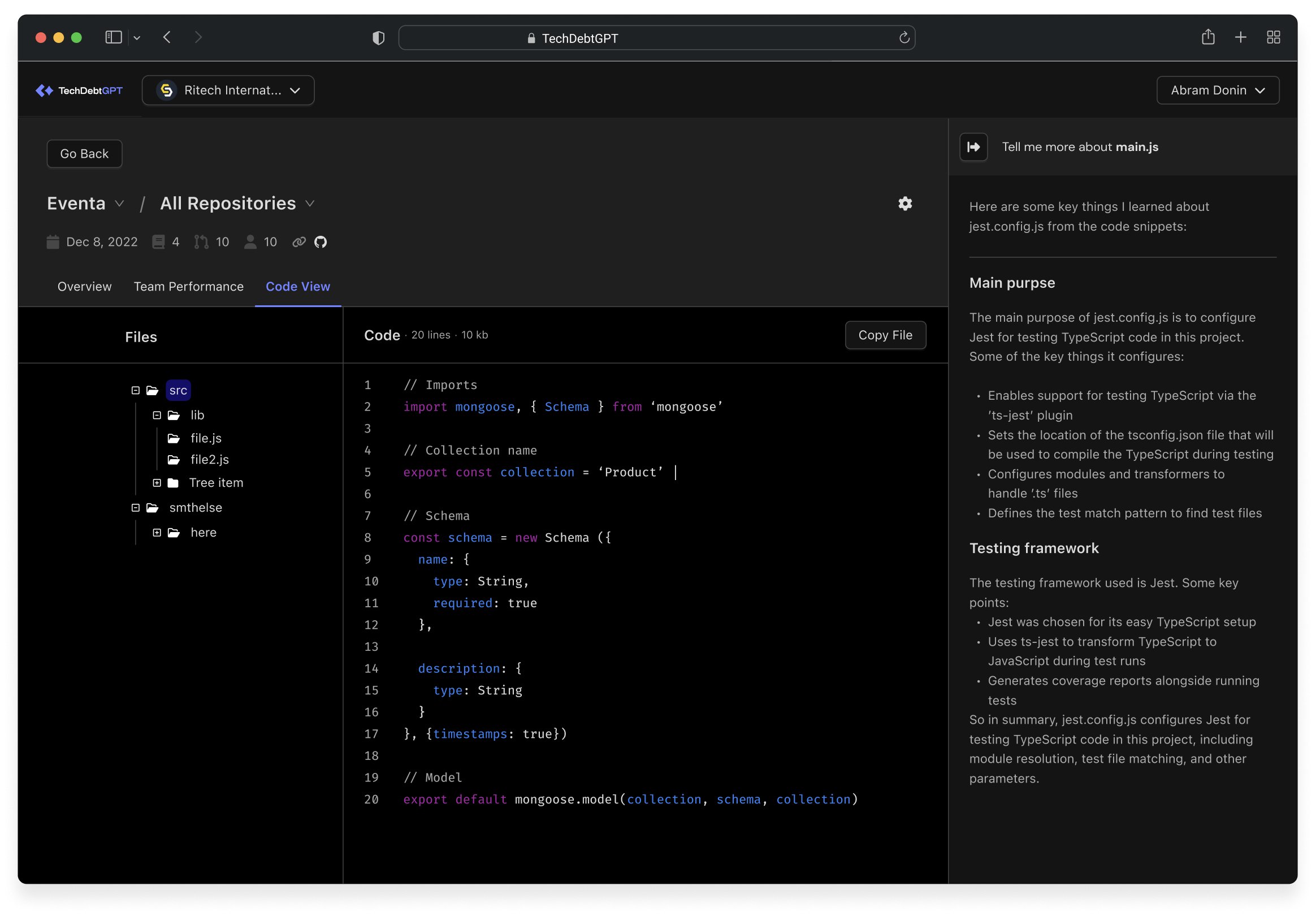
Some TechDebtGPT experiences relied on AI to interpret repository and code-level signals, which introduced a different design challenge: how much should the product claim when the underlying model may be uncertain?
I worked closely with engineering to shape how AI-generated findings and recommendations were presented, giving developers enough context to understand what the system found and verify the underlying source before acting on it.
01
Source context
Keep the underlying code visible for verification.
02
AI interpretation
Explain what the system found instead of presenting an unexplained score.
03
Actionable guidance
Help developers understand what to investigate next.
Onboarding
Reducing the path to first insight
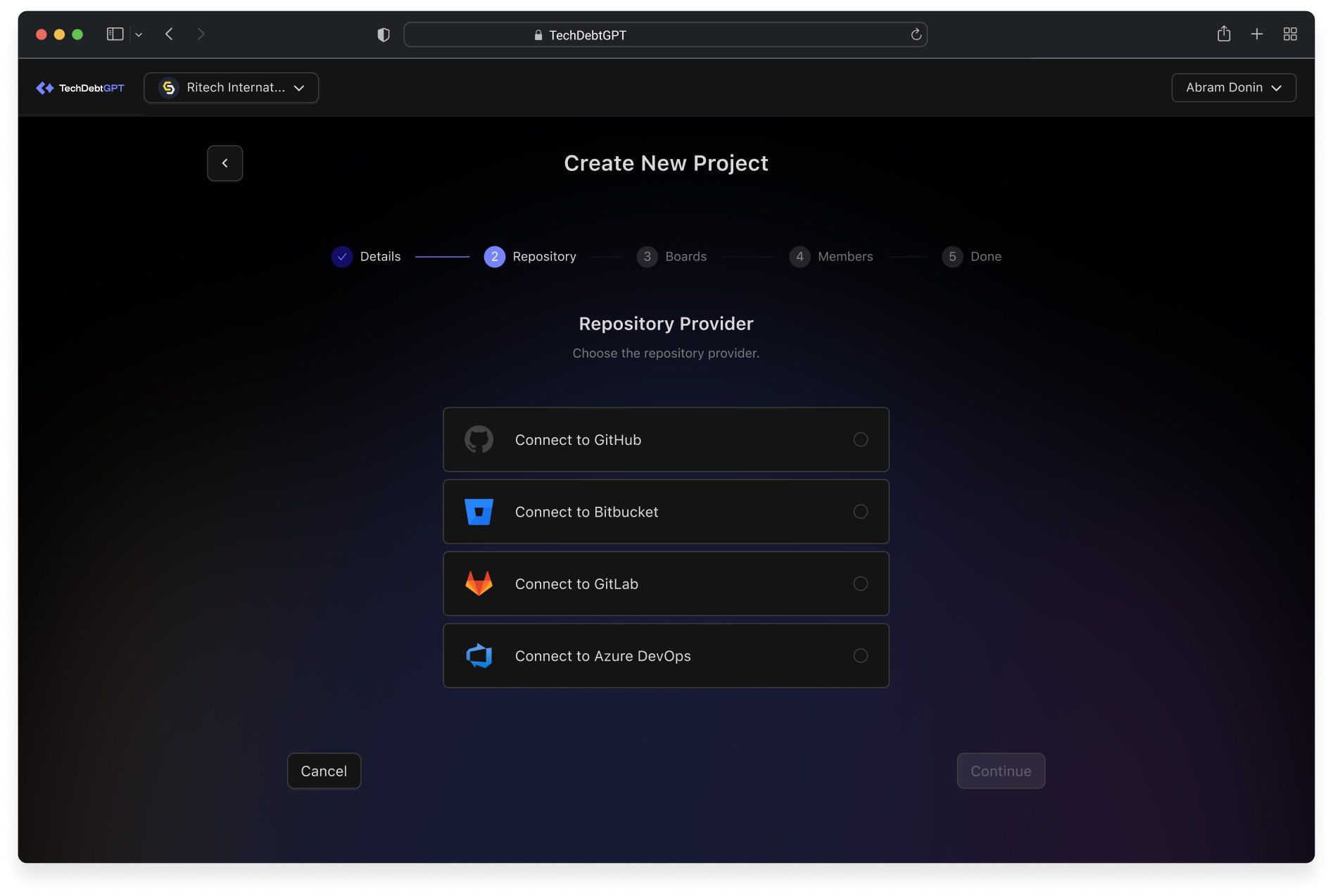
TechDebtGPT could only provide value after a team connected its engineering data.
I designed onboarding around getting users from account creation to their first analyzed project with minimal unnecessary setup, while supporting GitHub, GitLab, Bitbucket and Azure DevOps.

Outcome & Impact
Post-beta customer interviews showed that the product made engineering insights easier to understand and act on, contributing to a 46% increase in customer satisfaction.
The work also helped validate team-performance analytics as a valuable product direction beyond technical-debt monitoring.
+46%Customer satisfaction post-beta